English
 Tiếng Việt
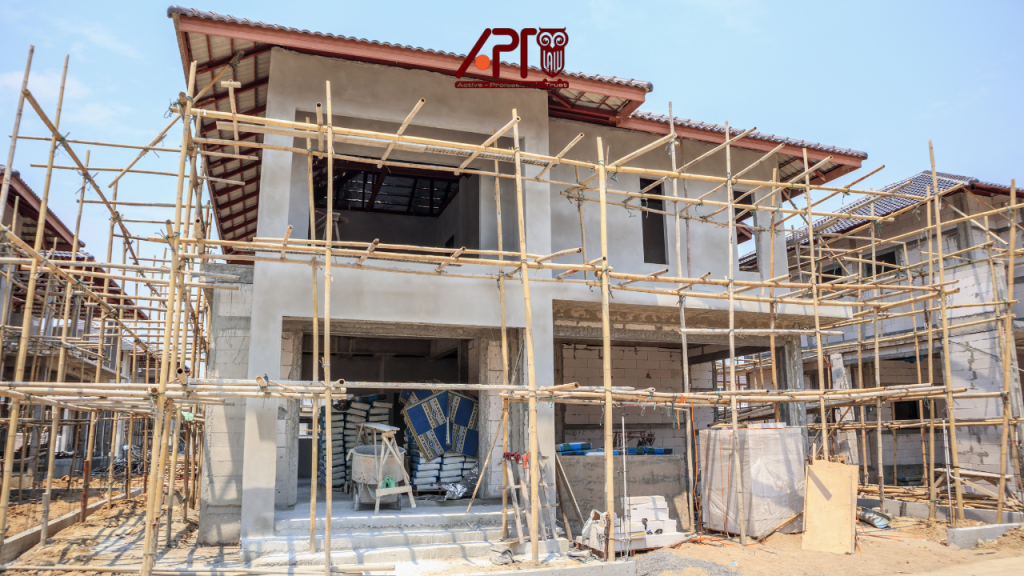
Correct understanding of the regulations on exemption from building permits for individual houses from July 1, 2026
From July 1, 2026, according to the new regulations of the Construction Law in 2025, many cases of individual houses will be exempted from construction permits to simplify administrative procedures for people.
However, ‘licensing exemption’ does not mean arbitrary construction. In fact, if the investor misunderstands the regulations, the investor may still be fined, suspended from construction or forced to dismantle the violating works.
Below are important things to keep in mind.

1. Conditions for exemption from building permits
Individual houses are exempt from building permits only when the following conditions are met at the same time:
About the intended use
The project must be a separate house to serve the daily needs of households and individuals.
Types of projects such as:
- mini apartment;
- hotel;
- factory;
- Large-scale business project
are not exempt.
About the scale of the project
- The building has a height of less than 07 floors (maximum 06 floors);
- The total construction floor area of the entire building is less than 500m.
About the planning location
Housing does not belong:
- urban area project;
- The housing area has a detailed plan of 1/500 scale;
- The area has special architectural management requirements.
For housing in rural areas, a license exemption applies only when:
- meet the conditions of scale;
- Not located in the urban expansion planning area, tourism or specific functional areas.
2. Cases where a construction permit is still required
The investor must still carry out the procedures for applying for a construction permit if it falls into one of the following cases:
- housing from 07 floors or more;
- Total construction floor area of 500m or more;
- The work is located in the conservation area, historical – cultural relic;
- houses in the area with special architectural management requirements;
- The project is located in the project of an urban area or a residential area with a detailed plan.
Self-construction in these cases can lead to:
- suspended construction;
- sanctioning administrative violations;
- Forced to dismantle the unauthorized or unauthorized construction part.
3. Licensing is not meant to be built arbitrarily
One point to note especially is that the new regulation only reduces the ‘authorization’ procedure, but does not eliminate the responsibility for construction management.
The authorities will switch from the ‘pre-inspection’ to ‘post-inspection’ mechanism. This means that the investor still has to take full responsibility for his project.
Investors should perform the following obligations:
Start-up Notice
Must notify the local management agency before proceeding with construction to serve the management of the status quo.
Actively check the planning
People need to check carefully:
- road planning;
- planning of public works;
- technical infrastructure protection corridor.
If building on land entangled in planning, the work can still be forced to dismantle even without a permit.
Comply with construction standards
The project must ensure:
- right construction boundaries;
- correct construction density;
- correct setbacks as planned.
For example, if the land area is only built up to 60% of the area, the entire land plot cannot be built.
Ensuring technical safety and adjacent works
Investors are responsible for:
- structure of works;
- fire prevention and fighting;
- construction safety.
In case of cracking, subsidence or affecting the adjacent house, the investor is responsible for compensation in accordance with the law.
Constructed in the right design
Do not arbitrarily:
- Expansion;
- Add floors;
- encroaching on area;
- Change the scale of the project during the construction process.
4. Common misunderstandings that easily lead to legal risk
“Level-free is not checked”
This is a common misconception. Authorities still have the right to check the status quo and handle violations at any time.
“If you have a red book, you can build whatever you want”
The red book only certifies land use rights, which does not mean that it is built against the planning or exceeds the construction target.
“Small house is comfortable”
Even if it is a small house, if you build over the density, cross the floor or encroach on the construction space, you can still be punished and forced to overcome the consequences.
“Limit-free, no design required”
Design is still important for:
- ensure structural safety;
- cost control;
- Limit the risk of subsidence and cracking of works;
- Safety protection for users.
Regulations on exemption of permits for construction of individual houses from July 1, 2026 is a remarkable reform step to reduce administrative procedures for people.
However, the exemption of the license is not synonymous with ‘management exemption’. Investors must still fully comply with planning, technical standards and regulations on construction safety.
Before starting construction, people should:
- carefully check planning information;
- prepare appropriate design documents;
- Consult with expertise if the project is large-scale or located in a specific management area.
Actively complying with the law from the beginning will help minimize the risk of disputes, sanctions or forced dismantling later.