English
 Tiếng Việt
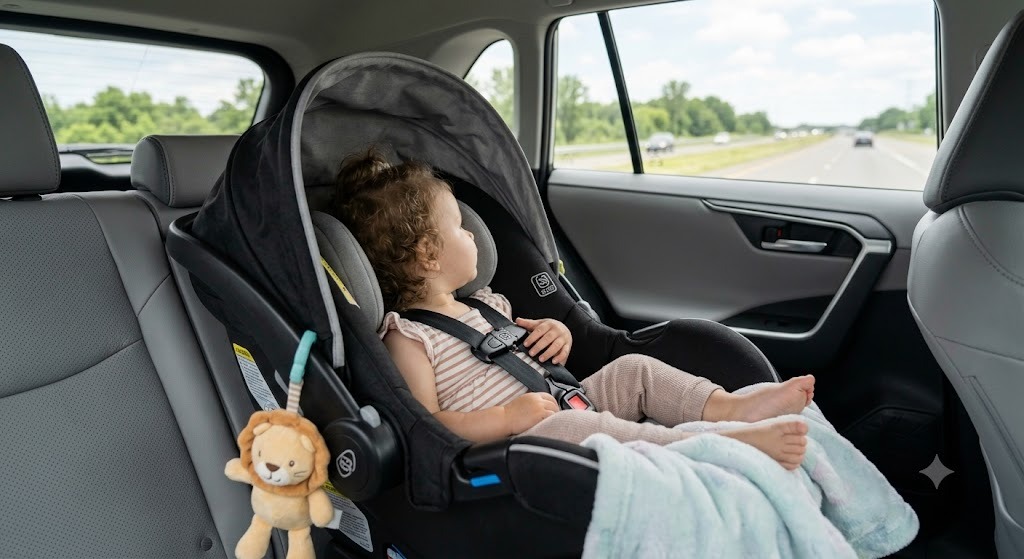
DRIVERS MAY BE FINED MILLIONS VIETNAM DONG FOR LETTING CHILDREN SIT IMPROPERLY IN CARS
From 1 July 2026, the regulation on transporting children in automobiles is officially being amended, setting out requirements that every driver needs to clearly understand in order to avoid violating the law on road traffic order and safety, while also ensuring the safety of young children.
Children Prohibited from Sitting in the Front Row
Clause 3, Article 7 of the 2025 Law Amending and Supplementing a Number of Articles of 10 Laws Related to Security and Order amended Clause 3, Article 10 of the Law on Road Traffic Order and Safety, providing for the subjects and standards of application as follows:
- Age and height: The regulation applies compulsorily to children under 10 years of age and under 1.35 meters in height.
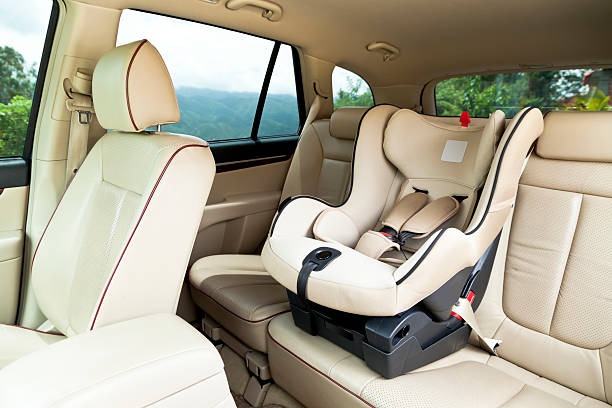
- Mandatory device: Children in the above group, when traveling in a private automobile, must be secured using a child safety device (a CRS or ECRS seat) appropriate for their weight and age.
Child Safety Devices
Section 1 of National Technical Regulation QCVN 123:2024/BGTVT explains: a child safety device is a device capable of ensuring safety for a child in a sitting or lying position in an automobile, designed to reduce the risk of injury to the user in the event of a collision or sudden deceleration of the vehicle by restricting the movement of the child’s body.
Child safety devices include CRS child seats and ECRS enhanced child seats.
A CRS child seat system is a combination of components including: the seat, straps, safety buckle, adjustment device, and other accessories such as a carrycot or impact shield; capable of being firmly installed in an automobile.
An ECRS enhanced child seat system comprises a fully integrated ISOFIX child seat (i-Size) and an ISOFIX-integrated child seat “for special vehicles.”
Exceptions Exempted from This Regulation
Under the new provision added in Law No. 118/2025, the obligation to use a child safety device does not apply to automobiles engaged in the business of passenger transport. This means that traditional taxis, ride-hailing taxis, contracted passenger vehicles, fixed-route passenger coaches, or tourist vehicles will not be required to use a child seat when transporting young passengers.
Strict Sanctions from 1 July 2026
During the period from 1 July 2026 to 14 August 2026 inclusive, enforcement continues to be carried out under Point m, Clause 3, Article 6 of Decree No. 168/2024/ND-CP.
A driver who commits either of the following two acts is subject to a fine ranging from VND 800,000 to VND 1,000,000:
- Transporting a child under 10 years of age and under 1.35 meters in height in the same row of seats as the driver (except for vehicles with only one row of seats);
- Failing to use a safety device appropriate for the child.
From 15 August 2026, Decree No. 238/2026/ND-CP — amending and supplementing a number of articles of Decree No. 168/2024/ND-CP — officially takes effect and splits the above sanction provision into two separate acts with two different levels of penalty. Specifically:
The act of failing to use a safety device appropriate for the child (except for automobiles engaged in the business of passenger transport) will only be subject to a caution (warning), instead of the monetary fine applied previously.
The act of allowing a child to sit in the same row of seats as the driver (except for automobiles with only one row of seats) will continue to be subject to a fine of VND 800,000 to VND 1,000,000, as under the previous regulation.
In light of these changes, drivers — particularly parents who regularly transport young children in private automobiles — should proactively review, check, and equip an appropriate safety device for children. The selection of a safety seat, booster seat, or specialized safety harness must be suitable for the child’s age, height, and weight, and children should be seated in the rear row of seats in order to minimize risk as much as possible in the event of a collision.