English
 Tiếng Việt
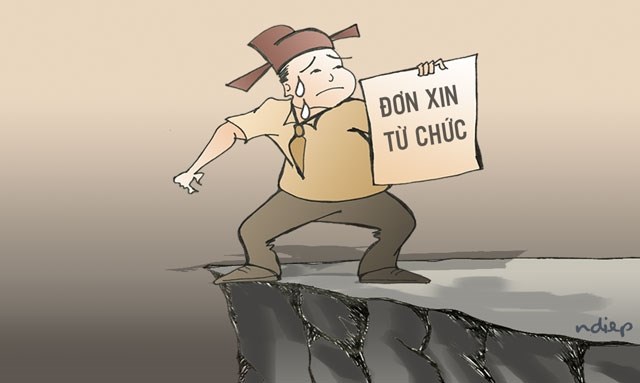
Effect of Resignation Letter from the Board of Directors in a Joint Stock Company in Vietnam
From January 2021, according to the Enterprise Law 2020, if a member of the Board of Directors (Board of Directors) submitted an application to resign as a member of the Board of Directors of a joint stock company (CTCP), that person may not stop being a member of the Board of Directors until approved by the General Meeting of Shareholders (General Meeting of Shareholders) of the relevant JSC. To limit potential problems that may arise from this regulation, a JSC may consider stipulating that the General Meeting of Shareholders must dismiss a member of the Board of Directors when that person submits a resignation letter. In addition, a member of the Board of Directors who resigns should delegate authority to another appropriate person until that member is officially dismissed.
Article 160.1(b) of the Enterprise Law 2020 stipulates that “The General Meeting of Shareholders dismisses members of the Board of Directors” if “a resignation is submitted and approved”. Meanwhile, the 2014 Enterprise Law previously stipulated that “Members of the Board of Directors are dismissed” if “there is a letter of resignation”. This suggests that a member of the Board of Directors can immediately stop being a member of the Board of Directors upon submitting his or her resignation. Article 26.4 of the model charter for public joint stock companies issued under Circular 116/2020 of the Ministry of Finance seems to confirm the above understanding of Article 160.1(b) of the Enterprise Law when stipulating that: “Members of the Board of Directors no longer have the status of members of the Board of Directors in the case of being dismissed, dismissed or replaced by the General Meeting of Shareholders according to the provisions of Article 160 of the Law on Enterprises”.
The approach under the Enterprise Law 2020 is not without problems. It would be unusual for a law to “force” a person to do a job they no longer want to do. This can be detrimental to both the Board member who wants to resign and the Joint Stock Company where that member works. To minimize this problem, the JSC’s charter may stipulate that the General Meeting of Shareholders must dismiss a member of the Board of Directors if that person resigns.
However, even if this option is applied, there are still two other problems:
- The Enterprise Law 2020 requires the General Meeting of Shareholders to dismiss a member of the Board of Directors who has submitted an “approved” resignation letter without clearly stipulating who will approve the resignation letter before the dismissal decision is issued. Accordingly, to resolve this issue, shareholders may have to approve a resignation letter before dismissing that Board member.
- Normally, the General Meeting of Shareholders will need time to issue a resolution. Accordingly, a member of the Board of Directors who resigns still has the status of a member of the Board of Directors from the date of resignation until the General Meeting of Shareholders dismisses that member. A JSC may not want a resigning Board member to continue participating in its business during that transition period. The conversion period can be long, especially in the case of a public joint stock company. Therefore, to minimize this problem, the JSC (or relevant new shareholder) may consider asking the resigning Board member to authorize another suitable person to represent that Board member during the transition period. Such authorization will be effective if approved by a majority of the members of the Board of Directors.
– Cheyenne George