English
 Tiếng Việt
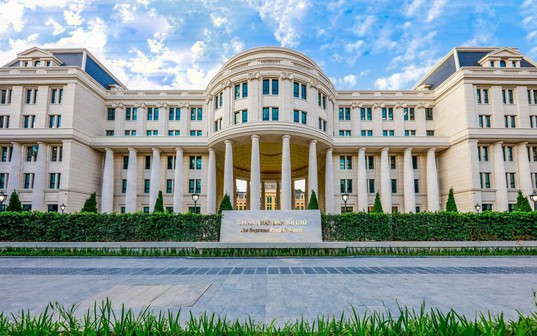
The Supreme Court clarifies many legal issues in Vietnam
On April 24, 2023, Judges of the Supreme Court of Vietnam (Supreme Court) organized an online seminar to resolve a number of issues arising in the Court’s judicial activities. Official Dispatch No. 196/TANDTC-PC issued by the Supreme Court on October 3, 2023 (Official Dispatch) records the results of the online seminar in April. The Official Dispatch mainly contains the Supreme Court’s clarifications and explanations of current legal regulations on many different areas of law, including criminal, civil, commercial and administrative. Although these clarifications and explanations are not binding, they are an important source of interpretation for the court system to rely on.
In this post, we will discuss some clarifications from the Official Letter that we found interesting or noteworthy:
1) The potential offender of “Intentionally publishing false information or concealing information in securities activities” (Article 209 of the 2015 Penal Code) is an individual or commercial legal entity responsible for disclosing information about securities to the public. not the parties participating in the securities transfer transaction.
Our comments:
The clarification for the Supreme Court was unclear because under securities regulations, sometimes parties to a securities transaction must disclose information about that transaction (for example, the purchase or sale of shares by a major shareholder/internal shareholder). Thus, it seems that this crime only applies to those who violate the obligation to disclose information according to securities regulations and not to those who do not disclose information according to contractual obligations.
2) In case one party in a commercial dispute is a limited liability company or joint stock company with many legal representatives but the charter does not assign responsibilities and powers of each legal representative and there is no power of attorney or agreement on the representative. company in dispute, the Court will rely on Article 12.2 of the Enterprise Law 2020 to determine that all legal representatives of that company are the legal representatives of the company participating in the proceedings.
Our opinion: Although the wording in the Official Letter is still a bit vague, since the Supreme Court Judge cited Article 12.2 of the Enterprise Law 2020, this statement should be understood to mean that any legal representative of the company must have full authority to represent the said company in legal proceedings.
3) In case the disputing parties do not request the Court to declare the agreement between the parties invalid, (1) if the Court finds that the agreement is legal, the Court must recognize the legal value of that agreement, (2) if the Court finds that the agreement does not meet the requirements for the agreement to be legally valid, the Court must declare the agreement invalid, regardless of whether the parties request it or not (paragraph III.7). .
Our Opinion: The Supreme Court Justices did not refer to any specific provisions of law regarding “[failure to meet] the requirements for an agreement to be legally valid”. Therefore, we believe that this content will include (i) Article 117 (Conditions for valid civil transactions) and Article 122 (Invalidity of civil transactions) of the 2015 Civil Code, which seem to be completely consistent with the description, and (ii) other cases to the same effect, such as Article 123 (Invalidity of civil transactions due to violation of prohibitions or social ethics) Civil Code 2015.
On the other hand, it is still unclear whether an invalid agreement has any other reason than “not meeting the conditions for the agreement to be legally valid” (for example, the case in Article 408 (Contract invalidity due to inability to perform the content) of the 2015 Civil Code) can be declared invalid by the Court even if the disputing parties do not request the Court to do so.
4) In case the right to use agricultural land as collateral in a mortgage contract expires within the term of the mortgage contract, the mortgage contract will be terminated according to the provisions of Article 422.5 of the 2015 Civil Code (termination of unenforceable contract). performed because the subject matter of the contract no longer exists) if the land use rights are not extended
Our opinion: Since the mortgagor can decide whether or not to apply for an extension with the competent authority, the mortgage contract should be drafted to guard against the risk that the mortgagor will intentionally let the land use rights expire during the term of the mortgage contract. released from the mortgage contract.
– Cheyenne George